During a recent outreach with the Viviane Health Technologies sales team, I spoke with a healthcare facility owner who raised a problem I suspect many hospitals and clinics across Nigeria and Africa quietly struggle with.
She understood the value of moving from paper records to an electronic medical record system. Her concern was not whether digitisation was useful. It was the work involved in getting there.
She had years of patient records on paper, and the thought of transferring all that information into a new system felt exhausting.
For a facility that has operated for five, ten or twenty years, “switching to an EMR” can sound like asking staff to manually retype thousands of patient folders before the new system becomes truly useful.
That is exactly the kind of problem AI and Optical Character Recognition, or OCR, should solve.
The real barrier is often migration
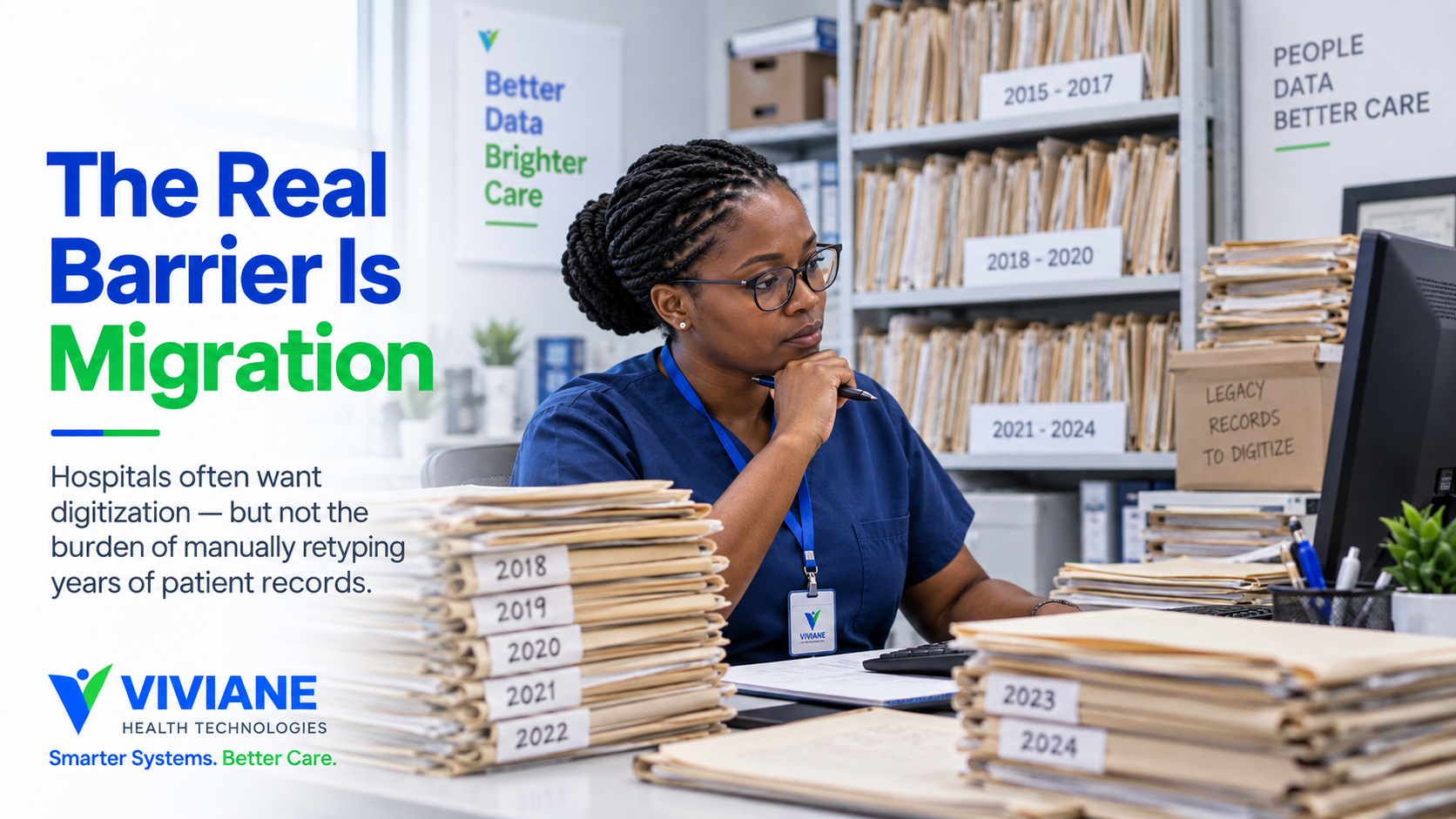 Most healthcare providers already understand the limitations of paper records. Files can be misplaced, handwriting can be difficult to read, patient histories may be scattered across multiple folders, and retrieving information from an old consultation can mean searching manually through shelves of documents.
But even when a facility wants to digitise, migration can become the biggest obstacle.
A clinic may look at a room full of patient folders and think:
“Who is going to enter all of this into the system?”
If digitisation means assigning staff to manually retype patient histories, diagnoses, medications, laboratory results and treatment notes, the cost is not only financial. It also means staff time, fatigue and disruption to everyday clinical work.
For a small hospital, physiotherapy clinic or diagnostic facility already operating with limited staff, that burden alone can delay digital transformation.
A better way: photograph, extract, review and save
 This is where AI-assisted medical record digitisation becomes practical.
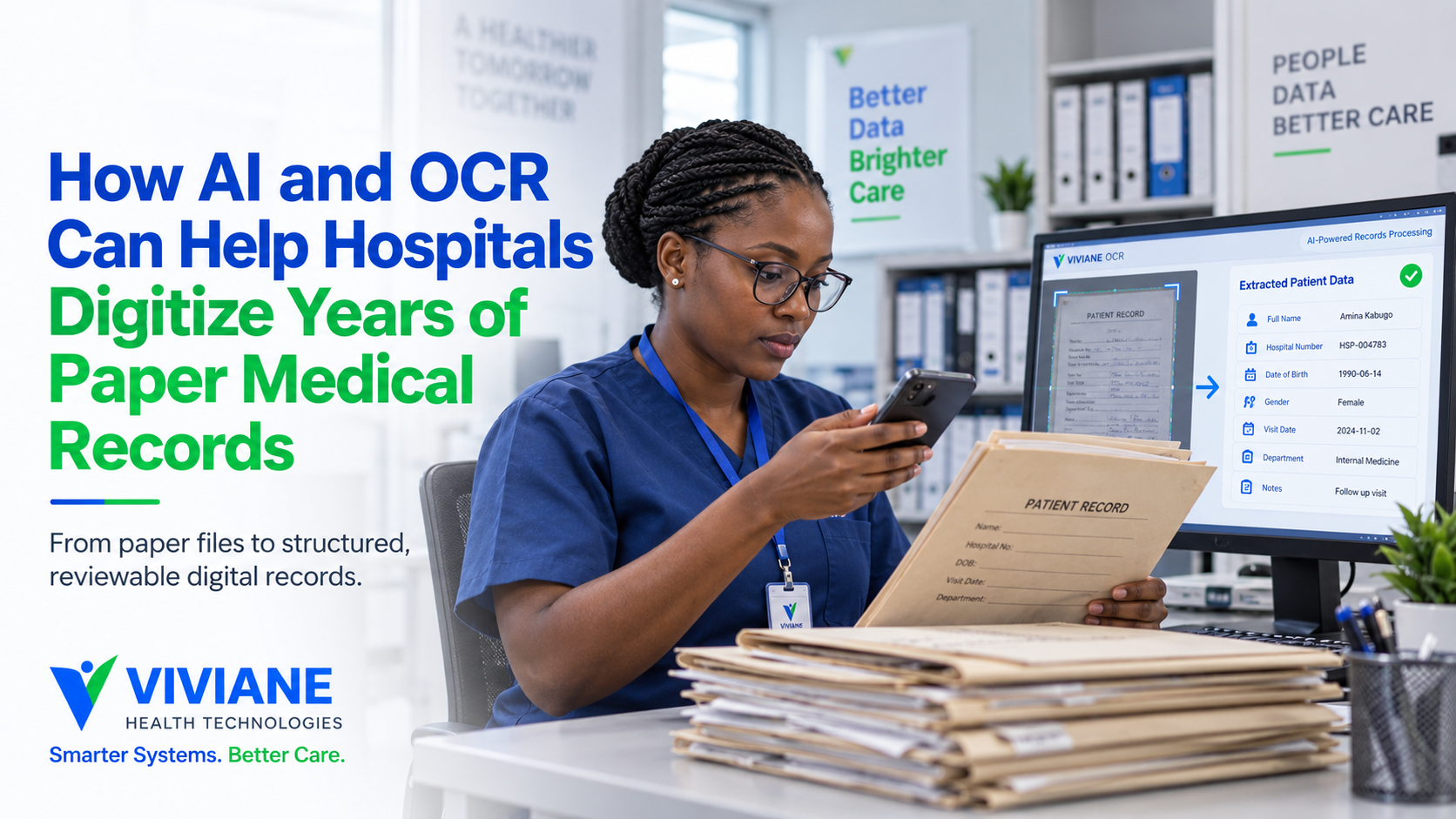
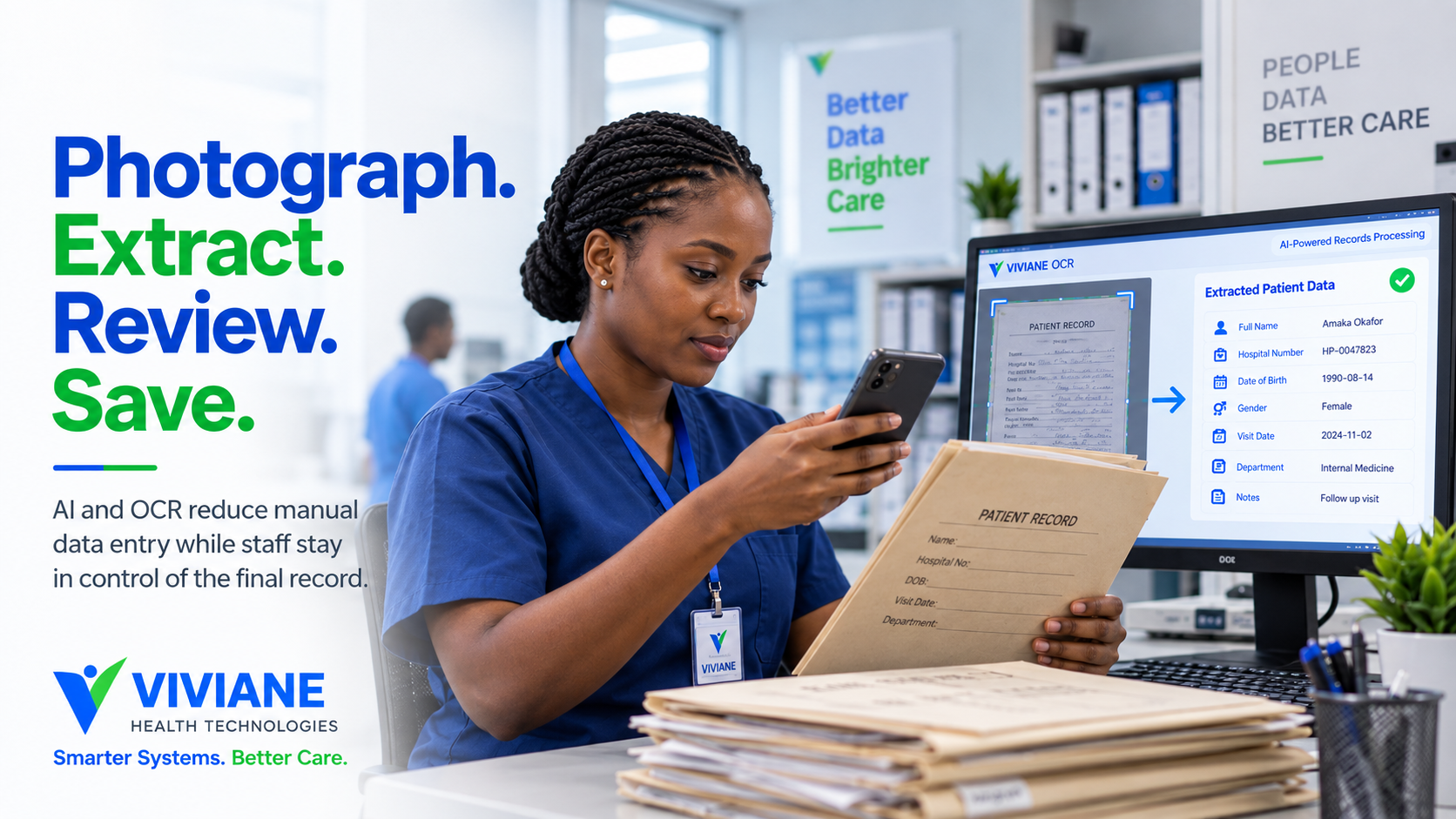
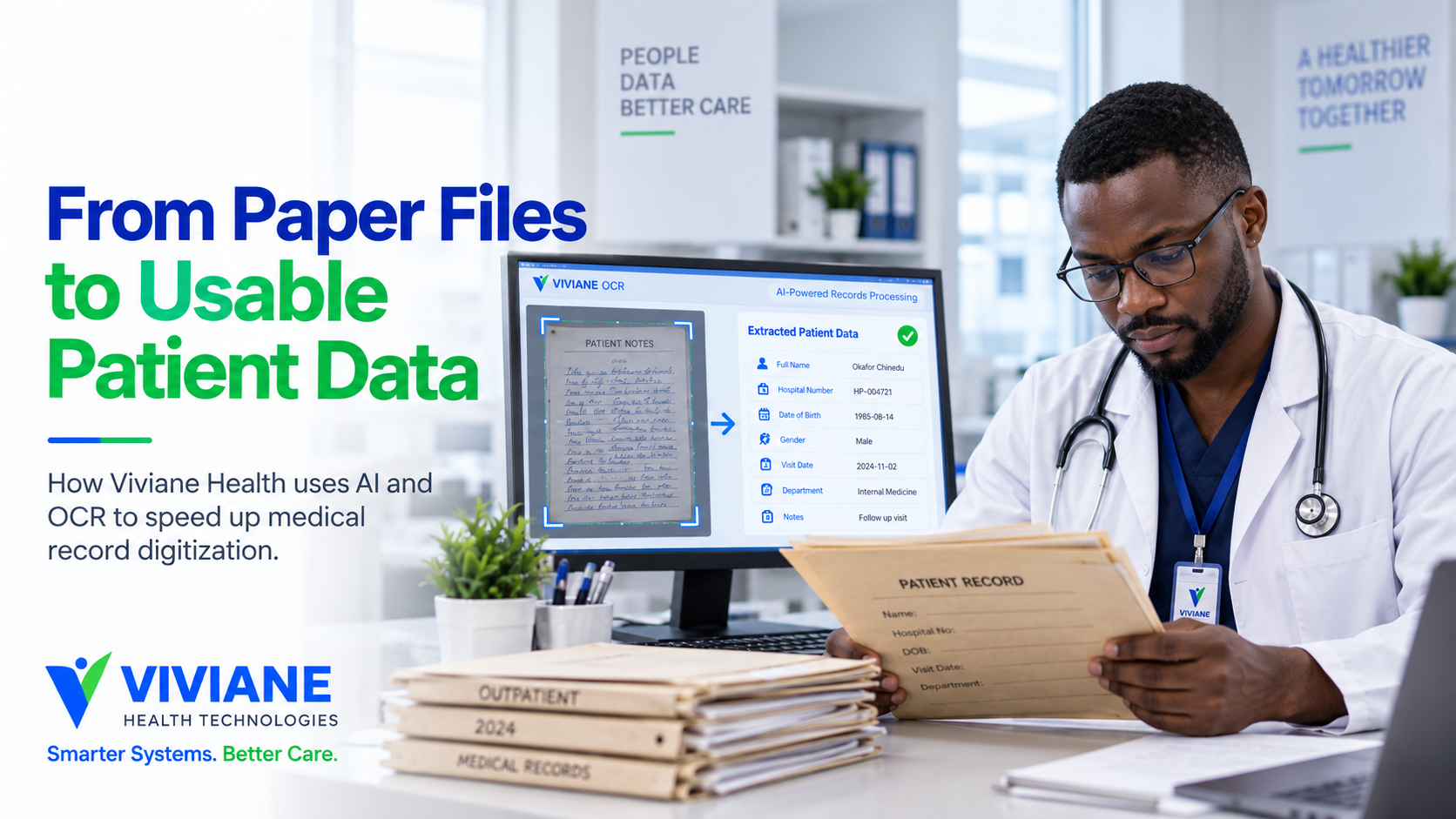
Instead of manually typing every historical record, a healthcare worker can photograph or scan an existing paper document. OCR extracts the text, while AI helps organise the information into useful clinical categories such as demographics, diagnoses, medications, allergies, laboratory results, treatment history and clinical notes.
The extracted information can then be reviewed and corrected by a healthcare worker before it becomes part of the patient's electronic record.
The workflow becomes:
Photograph or scan → extract → structure → review → save.
That is significantly more practical than asking healthcare workers to recreate years of medical history line by line.
This is already part of the Viviane Health ecosystem
 At Viviane Health Technologies, this is not just a future concept.
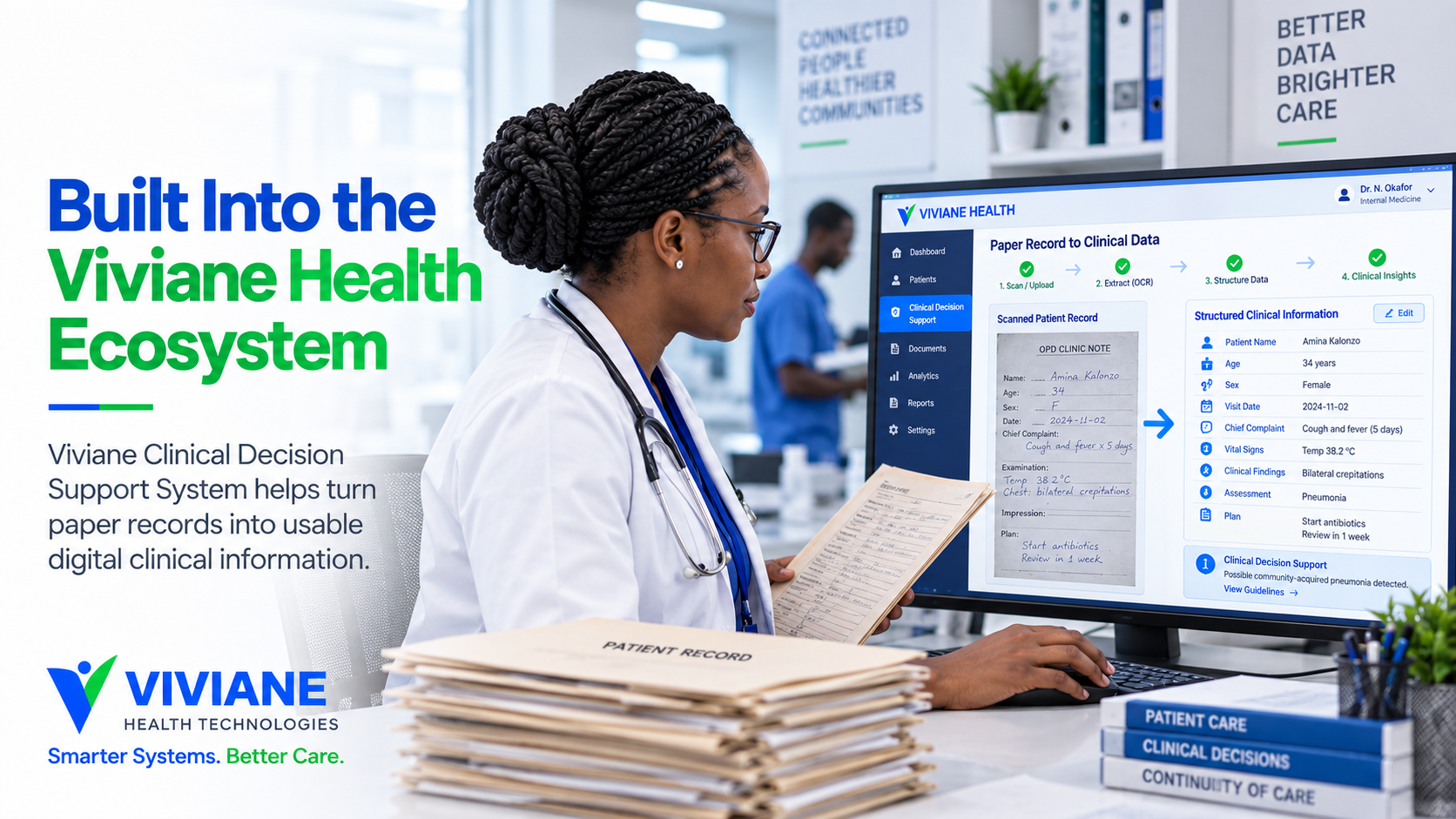
Our Viviane Clinical Decision Support System includes AI capabilities designed to help healthcare facilities work with existing clinical information, including the digitisation and transcription of paper medical records.
A facility using Viviane Health can take an existing paper record, extract the relevant clinical information, review it and move it into the patient's digital record within the same broader healthcare ecosystem.
This matters because digitisation should not end with creating a searchable PDF or storing a photograph of an old folder.
The real value comes when that information becomes usable.
A patient's previous diagnosis can become part of their clinical history. Medication information can support future consultations. Old investigation results can provide context for clinicians. Historical records can become part of a continuous patient journey rather than remaining trapped in a filing cabinet.
That is where combining OCR with clinical AI becomes more powerful than simple document scanning.
AI should assist clinicians, not silently rewrite medical history
Healthcare records are too important for fully automatic transcription without verification.
Old notes may contain difficult handwriting, faded documents, abbreviations or drug names that AI could interpret incorrectly.
That is why the Viviane approach is built around AI assistance with human verification.
The system helps reduce repetitive work, but a healthcare professional or authorised staff member remains responsible for reviewing the extracted information before it becomes part of the official medical record.
The objective is not to remove humans from medical record migration.
It is to remove unnecessary typing.
Hospitals do not need to digitise everything before they start
Another misconception is that a hospital must first convert its entire archive before adopting an EMR.
It does not.
A facility with thousands of old patient folders can begin with active patients, recent records, chronic-care patients or people returning for follow-up. Older files can then be digitised progressively as patients return.
This allows the hospital to begin benefiting from digital healthcare immediately instead of spending months preparing for a “perfect” migration.
With AI-assisted transcription inside the Viviane Health ecosystem, that progressive migration becomes considerably easier.
Digital transformation should include the journey from paper
 Across Africa, the health technology conversation often focuses on building better EMRs, laboratory systems, pharmacy systems and hospital management platforms.
But we also have to solve the transition problem.
It is not enough to tell a hospital that digital records are better and then leave its staff with twenty years of paper files to manually enter.
The technology provider should help bridge that gap.
That is one of the ideas behind the Viviane Health ecosystem: not simply providing software for facilities that are already digital, but building tools that help healthcare organisations become digital in the first place.
Sometimes a facility is not resistant to technology.
They are simply looking at ten years of paper records and wondering where to begin.
With AI, OCR and the Viviane Clinical Decision Support System, that starting point can be much simpler.